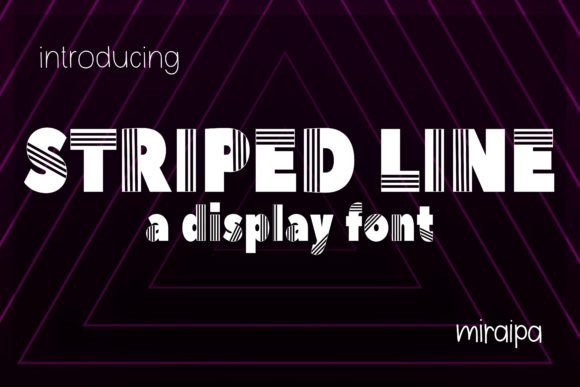
Striped Line: A Playful Font for Creative Expression
Striped Line is a display font that brings a unique blend of modernity and whimsy to any design project. Its playful, stylized characters add a touch of fun and eccentricity, making it ideal for creative professionals who want to stand out. Whether you're designing for a brand, a blog, or a personal project, Striped Line offers a fresh and engaging way to communicate your message.
What Makes Striped Line Unique?
Unlike traditional fonts that prioritize clarity and neutrality, Striped Line embraces a more expressive approach. The font features bold, zigzagging lines that create a sense of movement and energy. This visual style makes it perfect for projects that aim to capture attention and evoke emotion. Its distinct character sets it apart from standard typefaces, allowing designers to create something truly original.
The font’s design is both modern and nostalgic, blending contemporary aesthetics with a retro flair. This duality makes it versatile enough to work in a variety of contexts, from digital marketing campaigns to print materials. Its playful nature doesn’t compromise readability, ensuring that the message remains clear even when the style is bold.
Applications for Striped Line
Designers can use Striped Line in a wide range of applications. For instance, it works well for headlines and titles in branding, social media posts, and advertising. Its eye-catching appearance makes it a great choice for campaigns targeting younger audiences or those looking to convey a sense of creativity and innovation.
Bloggers and content creators might find Striped Line useful for adding visual interest to their websites or newsletters. When used sparingly, it can draw attention to key points or highlight special sections without overwhelming the reader. It also pairs well with simpler fonts, creating a balanced and dynamic layout.
Entrepreneurs and small business owners can leverage Striped Line to differentiate their brand. In industries where creativity is key—such as fashion, art, or tech—using a distinctive font can help establish a memorable identity. It's especially effective for logos, packaging, and promotional materials that need to make a strong first impression.
Adapting Striped Line for Different Goals
Depending on the project, Striped Line can be adjusted to suit various goals. For example, if the goal is to create a bold, attention-grabbing headline, the font can be used at a larger size with minimal spacing. On the other hand, if the goal is to maintain readability while still adding personality, it can be paired with a more neutral typeface and used in smaller sizes.
For digital platforms, Striped Line can enhance user experience by adding visual interest to buttons, banners, and headings. It works particularly well in mobile designs where space is limited, as its compact structure allows for efficient use of screen real estate. When used in web design, it can help guide the viewer’s eye and improve overall engagement.
In print media, Striped Line adds a tactile and visual appeal that can elevate the quality of a design. It’s ideal for brochures, posters, and packaging where a unique look is desired. By combining it with complementary colors and textures, designers can create a cohesive and striking visual identity.
Creative Ideas Using Striped Line
One creative idea is to use Striped Line in a series of illustrations or infographics. Its dynamic lines can complement visual elements, creating a unified and engaging narrative. This approach is particularly effective for educational content, where the goal is to present information in an accessible and entertaining way.
Another idea is to incorporate Striped Line into a custom logo or brand mark. By integrating the font with other design elements, such as icons or shapes, businesses can create a distinctive and memorable brand presence. This is especially useful for startups or niche markets looking to stand out in a competitive landscape.
For personal projects, Striped Line can be used in journaling, handmade cards, or DIY crafts. Its playful style adds a personal and artistic touch, making it a great choice for individuals who want to express their creativity in a unique way. It can also be used in social media graphics, such as Instagram stories or Twitter headers, to add a fun and eye-catching element to online profiles.
Best Practices for Using Striped Line
To ensure that Striped Line is used effectively, it’s important to consider the context and audience. Overusing the font can lead to clutter and reduce readability. Instead, use it strategically to highlight key elements or add visual interest where needed.
When working with different formats, such as web, print, or video, test the font in various environments to see how it performs. Adjust size, spacing, and color as needed to maintain clarity and impact. Consistency is also key—using the font in a uniform way across all materials helps reinforce brand identity and professionalism.
Finally, always keep the audience in mind. If the target demographic prefers a more formal or traditional look, Striped Line may not be the best choice. However, for audiences that value creativity and uniqueness, it can be a powerful tool for expression and communication.