Very Merry: A Playful and Stylish Font for Diverse Design Needs
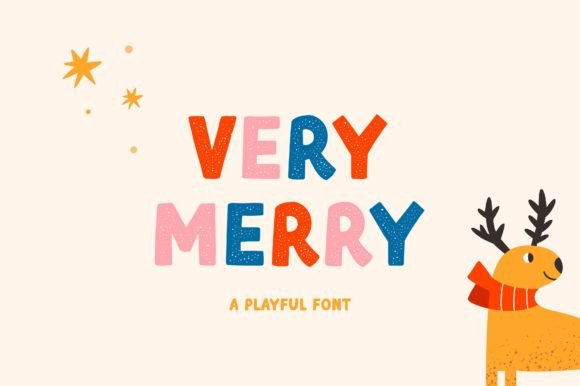
Very Merry is a font that blends whimsy with sophistication, offering a unique balance between casual charm and professional appeal. Its youthful spirit makes it a standout choice for a wide range of design projects, from branding materials to social media content. The font's playful character is enhanced by its PUA encoding, which allows users to access an extensive set of glyphs and ligatures without the need for complex software or additional tools.
Designed with versatility in mind, Very Merry is suitable for both formal and informal applications. It can be used in corporate branding, where its clean lines and structured forms provide a polished look, as well as in more relaxed settings such as packaging, posters, and invitations. This flexibility makes it a valuable addition to any designer’s toolkit, especially when the goal is to convey energy and creativity without sacrificing clarity.
What Makes Very Merry Unique?
One of the key features that sets Very Merry apart from other fonts is its ability to maintain readability while still delivering a distinctive visual identity. Unlike some more ornate or decorative typefaces, Very Merry avoids excessive flourishes that might hinder legibility. Instead, it uses subtle curves and rounded edges to create a friendly, approachable aesthetic.
The font’s PUA encoding is another significant advantage. This means that designers can easily access all the special characters and ligatures included in the font without relying on third-party applications or complex keyboard layouts. For those who work with multiple languages or need specific symbols, this feature can save time and streamline the design process.
Very Merry also offers a sense of movement and rhythm that can enhance the overall composition of a design. Its letterforms are not static but have a dynamic quality that can make text feel more engaging. This is particularly useful in projects that require a lively or energetic tone, such as promotional materials, event announcements, or digital content aimed at younger audiences.
Comparing Very Merry to Similar Fonts
When evaluating fonts like Very Merry, it’s helpful to consider how they compare to other options in terms of style, usability, and application. While there are many fonts that offer a similar playful vibe, Very Merry distinguishes itself through its balance of formality and fun. For example, fonts like Kalam or Lobster may have a more pronounced casual feel, but they often lack the structural consistency needed for professional use.
In contrast, Very Merry maintains a level of refinement that makes it suitable for a broader range of projects. It doesn’t lean too heavily into the cursive or script style, which can sometimes be difficult to read in larger sizes or when used in headings. Instead, it strikes a middle ground that allows it to function effectively in both short phrases and longer blocks of text.
Another consideration is the font’s adaptability across different mediums. While some fonts perform well in print but struggle on digital screens, Very Merry has been designed with both in mind. Its clear letterforms and consistent spacing ensure that it remains legible whether it’s used in a brochure, a website, or a social media post.
Best Fit Situations for Very Merry
Very Merry is ideal for projects that require a friendly, approachable tone. It works well in branding for businesses that want to project a sense of warmth and creativity, such as cafes, boutique stores, or creative agencies. Its versatility also makes it a good choice for events or campaigns that aim to connect with a younger demographic.
For designers looking to add a touch of personality to their work, Very Merry can serve as a strong alternative to more traditional fonts. It’s particularly effective in designs that incorporate illustrations, icons, or other visual elements that benefit from a cohesive and expressive typographic style.
However, it’s important to note that Very Merry may not be the best choice for every situation. In contexts where a more serious or minimalist look is required, such as legal documents, financial reports, or high-end fashion branding, a more restrained font might be more appropriate. The font’s playful nature could be seen as inconsistent with the tone of these types of projects.
Tradeoffs and Limitations
While Very Merry offers many advantages, it’s not without its tradeoffs. One potential limitation is its suitability for large-scale text. Because of its rounded shapes and flowing lines, it may not be the most efficient choice for body text in long-form content. In such cases, a more conventional sans-serif or serif font might be better suited for maintaining readability over extended reading sessions.
Additionally, the font’s distinctiveness can sometimes make it less versatile in multi-font compositions. If a designer is using multiple typefaces in a single project, Very Merry may stand out too much or clash with other fonts that have a different weight or structure. This is something to consider when planning the overall typographic hierarchy of a design.
Another factor to keep in mind is the availability of the font. While Very Merry is accessible through various font platforms, it may not be as widely recognized as some of the more popular typefaces. This could be a consideration for designers who need to ensure that their chosen font is compatible with the systems or devices that will be used to view or print the final output.
When to Choose Very Merry
Very Merry is a strong option when the goal is to create a design that feels both modern and inviting. It’s particularly well-suited for projects that aim to engage audiences emotionally, such as marketing campaigns, product packaging, or social media content. Its ability to convey a sense of fun and creativity without being overly informal makes it a practical choice for a variety of applications.
For designers who are looking for a font that can add visual interest without compromising clarity, Very Merry offers a compelling solution. It can be used effectively in headlines, logos, and titles, where its unique character can help draw attention and reinforce brand identity.
Ultimately, the decision to use Very Merry depends on the specific needs of the project and the desired tone. It’s a font that thrives in environments where a balance between creativity and professionalism is essential. By understanding its strengths and limitations, designers can make informed choices about when and how to incorporate it into their work.