Costaville: A Vintage Display Font with Timeless Appeal
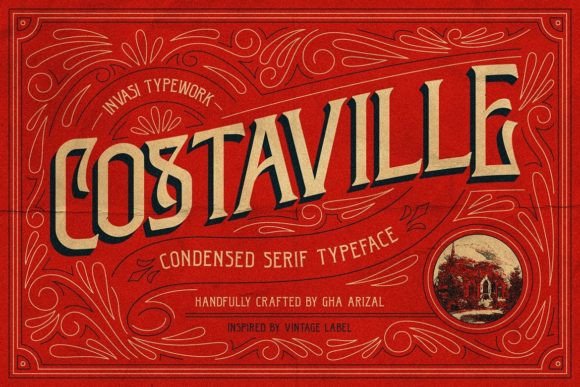
Costaville is a vintage display font that captures the essence of 19th-century luggage labels, offering a unique blend of historical charm and modern design utility. Its thick-and-thin strokes, condensed serif style, and all-caps format make it ideal for a wide range of visual projects, from signage to cover designs. Designed with practicality in mind, Costaville provides a distinctive aesthetic that can elevate any creative endeavor.
What Makes Costaville Stand Out
At its core, Costaville is more than just a font—it's a design element with a rich backstory. The inspiration drawn from 19th-century luggage labels gives it a nostalgic feel, making it a compelling choice for designers looking to infuse their work with character. Unlike many modern fonts that prioritize minimalism, Costaville embraces a more ornate, handcrafted appearance that feels both authentic and intentional.
The font’s condensed structure allows for efficient use of space without sacrificing readability. This makes it particularly useful in situations where text needs to be concise yet visually engaging, such as in headlines, logos, or labels. Its all-caps style ensures consistency in weight and form, which is especially beneficial when working on branding materials that require a cohesive look.
Key Features and Design Characteristics
One of the most notable aspects of Costaville is its PUA (Private Unicode Area) encoding. This means that users have direct access to all the glyphs and ligatures included in the font, without needing special software or keyboard layouts. For designers who rely on custom typography, this feature enhances flexibility and control over the final output.
The font’s thick-and-thin contrast adds a dynamic quality to its appearance. This variation in stroke weight creates a sense of movement and energy, making it well-suited for display purposes where visual impact is key. Whether used in a poster, packaging, or digital interface, Costaville maintains a level of sophistication that is hard to replicate with other typefaces.
Practical Applications and Real-World Use
Costaville excels in scenarios where a vintage or retro aesthetic is desired. For example, it works exceptionally well in branding for artisanal products, boutique businesses, or events with a historical theme. Its ability to convey a sense of heritage and craftsmanship makes it a strong candidate for projects targeting audiences who value authenticity and detail.
In signage, Costaville can help create a memorable identity for physical spaces, such as cafes, galleries, or retail stores. Its condensed form ensures that information remains legible even when space is limited. Similarly, in cover design, whether for books, magazines, or digital publications, the font can add a touch of elegance that draws attention and conveys a specific mood.
Quality, Usability, and Flexibility
From a technical standpoint, Costaville is built with precision and care. The font maintains consistent proportions across different sizes, ensuring that it looks sharp and readable at both small and large scales. This reliability is crucial for designers who need to maintain visual integrity across various mediums and formats.
Usability is another strong point. The PUA encoding simplifies the process of accessing special characters and ligatures, allowing users to experiment with typographic details without unnecessary complications. This feature is particularly valuable for professionals who want to customize their designs without being restricted by standard font limitations.
Who Can Benefit from Costaville?
Costaville is best suited for creatives and professionals who are looking to add a unique visual identity to their work. Entrepreneurs launching a new brand, marketers creating eye-catching campaigns, or artists designing album covers may find the font to be an invaluable tool. Its versatility also makes it a good fit for educators and publishers who want to incorporate vintage elements into educational materials or literary works.
Freelancers and small business owners often seek tools that offer both aesthetic appeal and functional value. Costaville meets these needs by providing a high-quality, customizable font that can be used across multiple projects. Its ability to stand out while remaining professional makes it a reliable choice for those who want to differentiate their work in a competitive market.
Limitations and Considerations
While Costaville is highly effective in display contexts, it may not be the best choice for body text. Its condensed structure and thick-and-thin strokes can reduce readability when used in long paragraphs. Therefore, it is important to consider the intended use case before incorporating it into a design.
Additionally, because of its distinct style, Costaville may not align with every project’s aesthetic goals. Designers should evaluate whether its vintage characteristics complement the overall vision of their work. In some cases, a more neutral or modern typeface might be more appropriate.
Final Thoughts on Costaville
Costaville is a font that bridges the gap between historical inspiration and contemporary design. Its unique combination of style, functionality, and flexibility makes it a valuable asset for a wide range of creative applications. Whether used in branding, signage, or editorial design, it offers a way to inject personality and character into visual communication.
For those seeking a vintage display font that stands out without overwhelming the viewer, Costaville is worth exploring. Its thoughtful design, ease of use, and adaptability ensure that it can serve as a reliable and effective tool in various projects. As with any design resource, the key to success lies in understanding how it fits within the broader context of the work at hand.