Writing Kids: A Handwritten Font for Creative Projects
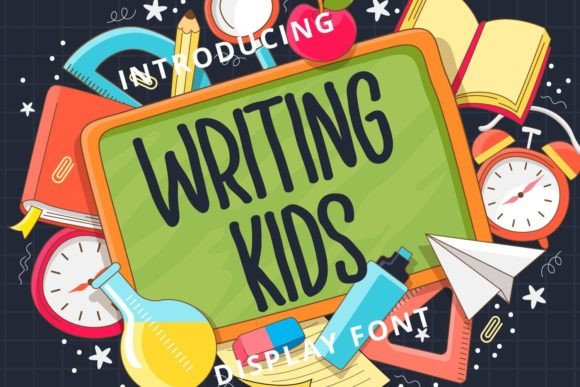
Writing Kids is a distinctive handwritten display font that brings a playful and personal touch to any design. Its unique style makes it ideal for projects targeting younger audiences or those seeking a warm, approachable aesthetic. Whether you're designing for children's books, educational materials, or creative branding, this font offers a versatile solution that can elevate your work with its charming character.
Designed with a casual, almost scribbled appearance, Writing Kids mimics the look of real handwriting. This quality gives it an authentic feel that digital fonts often lack. The irregularities in letterforms add a sense of individuality, making it stand out in a sea of more rigid typefaces. For creators looking to inject personality into their designs, this font provides a compelling option that feels both professional and heartfelt.
Key Characteristics of Writing Kids
One of the most notable features of Writing Kids is its readability. Despite its handwritten style, the font maintains a level of clarity that allows it to be used effectively in various contexts. The spacing between letters and the consistent baseline ensure that text remains legible even at smaller sizes. This makes it suitable for headings, titles, and short phrases rather than long blocks of text.
The font also includes a range of stylistic variations, such as alternate characters and ligatures, which allow for greater customization. These options enable designers to fine-tune the look of their work, ensuring that the font aligns with the specific tone and message they want to convey. Additionally, the presence of uppercase and lowercase letters, along with punctuation marks, enhances its usability across different applications.
Purpose and Practical Value
Writing Kids was developed with a clear purpose in mind: to serve as a go-to font for creative projects that require a friendly and expressive visual style. It excels in environments where a human touch is desired, such as marketing campaigns for children’s products, school-related materials, or personal branding for educators and artists.
Its flexibility extends beyond just visual appeal. The font works well in both digital and print formats, making it a reliable choice for a wide range of projects. Whether used in social media graphics, presentations, or printed brochures, Writing Kids adapts seamlessly to different mediums. This versatility ensures that it remains a valuable asset in a designer’s toolkit.
Real-World Performance
In practical use, Writing Kids performs consistently well across different platforms and software. It is compatible with most design tools, including Adobe Illustrator, Photoshop, and Canva, allowing for easy integration into existing workflows. The font’s file size is also manageable, ensuring that it does not slow down performance or complicate project management.
When used in larger formats, such as posters or banners, the font retains its charm without becoming overwhelming. However, it may not be the best choice for body text due to its more decorative nature. Instead, it shines when used strategically as a highlight or accent, drawing attention to key elements without distracting from the overall design.
Quality and Usability
The quality of Writing Kids is evident in its attention to detail. Each character is carefully crafted to maintain a cohesive style while still allowing for individual expression. This balance ensures that the font feels natural and unforced, which is essential for maintaining a professional appearance in creative work.
Usability is another strong point. The font is easy to install and activate, with straightforward licensing terms that make it accessible for both personal and commercial use. Its clean design also means that it pairs well with other fonts, offering a range of pairing possibilities for designers who want to create visually appealing compositions.
Who Benefits Most from Writing Kids
Writing Kids is particularly beneficial for professionals in fields that rely on visual storytelling or audience engagement. Educators, for example, can use it to create engaging lesson plans, flashcards, or classroom decorations that capture students’ attention. Similarly, marketers targeting families or children’s products can leverage the font to craft more relatable and appealing content.
Freelancers and small business owners who focus on creative services may find Writing Kids useful for branding materials, such as logos, business cards, or promotional items. Its ability to convey warmth and creativity makes it an excellent choice for businesses that want to establish a friendly and approachable image.
Considerations and Limitations
While Writing Kids is a powerful tool, it is important to recognize its limitations. Due to its stylized nature, it may not be suitable for all types of projects. For instance, formal documents, technical manuals, or corporate branding may require a more traditional and structured font. In such cases, using Writing Kids could undermine the professionalism of the design.
Additionally, the font’s handwritten appearance may not translate well to all languages or scripts. Designers working with non-Latin alphabets should test the font thoroughly to ensure that it meets their needs. This consideration is especially relevant for international projects or multilingual content.
Final Thoughts
Writing Kids is a standout font for anyone looking to add a personal and creative flair to their work. Its unique style, readability, and versatility make it a valuable addition to any designer’s collection. While it may not be the best fit for every project, its strengths in visual appeal and usability make it a strong contender for a wide range of creative applications.
For professionals and hobbyists alike, Writing Kids offers a way to express ideas with authenticity and charm. Whether used in educational settings, marketing materials, or personal projects, this font has the potential to enhance the visual impact of any design. As with any creative tool, the key to success lies in understanding its strengths and applying it thoughtfully to meet specific goals.